subsidymantra
86, Gopalpura Bypass Rd, Jaipur subsidymantra@gmail.com
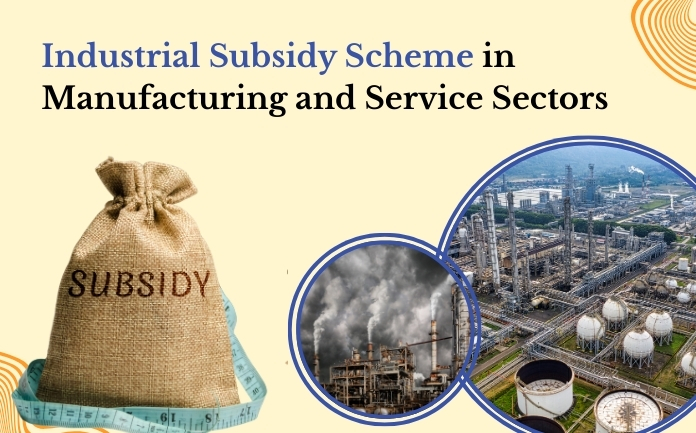
Most MSMEs find managing their costs a daily struggle. Rent, electricity bills, interest rates on loans, and machinery all add up. The pressure is even greater for manufacturing and service companies that are struggling to grow on limited resources. The Industrial Subsidy Scheme offers support to ease this burden. Many business owners are aware of the Industrial Subsidy Scheme, but few truly understand its workings or whether it applies to their industry. This article will explain the scheme without using technical jargon.

Understanding the Industrial Subsidy Scheme

The Industrial Subsidy Scheme is a collection of incentives offered by the central government and states to promote growth in industry and services. These are not freebies. These are not handouts, but structured benefits that reduce the financial burden on MSMEs who invest, expand or create jobs. The scheme is often part of an overall industrial policy. Benefits can be provided at various stages, such as during setup, expansion or even operations. The structure will vary depending on the location, state and type of business.

How Manufacturing MSMEs Benefit

Capital investment in manufacturing units is typically higher. Whether it’s maintaining infrastructure or purchasing machinery, costs are constant. The Industrial Subsidy Scheme reduces this pressure in practical ways. The following are some of the common support programmes available to MSMEs in manufacturing:
  • Subsidy for plant and machinery investments
  • Interest subsidy for term loans and working capital
  • Electricity tariff concessions that lower costs
  • Stamp duty and registration fees reimbursed
  • Tax incentives in state policies
Units located in areas with a high industrial backwardness or priority are often eligible for higher benefits. The Industrial Subsidy Scheme encourages businesses to expand beyond the major cities and supports regional development.

Supporting Service Sector MSMEs

Some MSMEs that are service-based assume that subsidies are meant only for factories. Many state policies include service industries in the industrial subsidy scheme. Benefits for service MSMEs include:
  • Capital Support for Office Setup and Equipment
  • Interest subsidy for business loans
  • Rent or Lease Reimbursement
  • Work-related incentives
  • Support for skill development and training
The Industrial Subsidy Scheme acknowledges that the service sector is becoming increasingly important in terms of employment and economic growth, even though the incentive structure differs from manufacturing.

Who can apply for the Industrial Subsidy Scheme?

Some conditions are common to all states, while others vary. An MSME must typically meet the following criteria to qualify for an Industrial Subsidy Scheme:
  • Register under the MSME framework
  • Operate during the policy period
  • Compliance with legal and regulatory requirements
  • Invest in approved limits
  • Submit your subsidy claim within the specified timeframe
Depending on the incentive, both new units as well as existing MSMEs that are expanding or modernising their operations may qualify.

What to expect during the application process

Today, the majority of applications for industrial subsidies are submitted online. Preparation is important. These general steps include:
  1. Registration of MSMEs and Project Setup
  2. Identification of subsidy policies applicable
  3. Online submission via government portals
  4. Uploading supporting documents
  5. Departmental inspection or verification
  6. Approval of Subsidy Release
Understanding the application process is as important as understanding eligibility.

Why industrial subsidy schemes matter in reality

Cost reduction is the real value of the Industrial Subsidy Scheme. Reduced project costs can improve cash flow and reduce the burden of loans, making businesses more competitive. These savings are vital for MSMEs that operate on tight margins. They can have a direct impact on survival and growth. Subsidies can be used to help businesses expand, improve technology, and hire more skilled workers without having to overextend their finances.

Summary

You can also find out more about the following: Industrial Subsidy Scheme. It is not only a policy tool, but a system of practical support for MSMEs both in the manufacturing and service industries. The benefits are dependent on the correct application and timely compliance. MSMEs who are looking for clarification on eligibility, documents, and policy updates. Subsidy Mantra: This guide provides accurate and reliable information to help businesses navigate the subsidy scheme with confidence. 

FAQs – Frequently Asked Questions

Q1. Does the Industrial Subsidy Scheme cover manufacturing and service MSMEs equally? 

Yes, most state industrial policies cover both sectors, though benefits vary.

Q2. Are most subsidies reimbursed only after an eligible investment or expenditure?

Q3. Can existing MSMEs apply for benefits?

Many schemes encourage expansion, modernisation and job creation.

Q4. Is the Industrial Subsidy Scheme similar in all states? 

Each state has its unique policy, limit, and incentive structure.

Q5. What happens if my application is late?

Late applications will be rejected, as deadlines are strictly adhered to. Stay updated with the latest government schemes and business tips – follow us on Instagram and subscribe to our YouTube channel for easy guides, videos, and updates.
Related Tags:
Social Share:

Leave a comment